Kidney Stones- symptoms, causes and treatment.
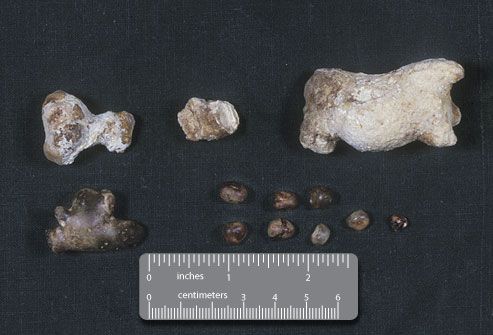
Kidney stones are a very common medical condition known medically as Renal Calculus . This word derives its meaning from Latin- Rene’s means kidney and Calculus-stone. Renal calculus is a result of aggregation of dietary minerals present in urine-in kidney.
Kidney stones are classified differently depending on their location in the urinary system.
A condition where the stone is lodged in the kidney is Nephrolithiasis. If the stone is in the ureter the condition is called Ureterolithiasis and if the stone is in the bladder the condition is called Cystolithiasis.
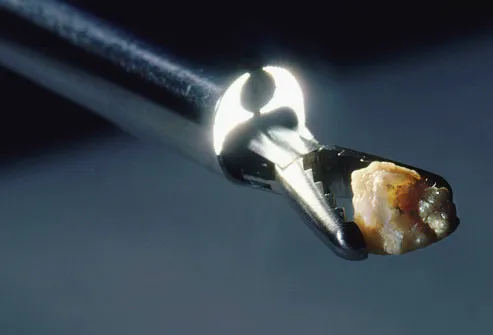
Kidney stones are more common in Middle East and 80% of those suffering from this condition are men.
Normally kidney stones pass out with urine if the size is below 3 mm . But stones of bigger size could cause obstruction of the ureter and hence cause pain in the flanks, lower abdomen or groin.
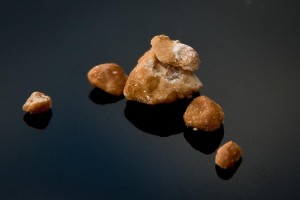
Symptoms:- The most common symptom is an excruciating pain which occurs intermittently and radiates from flanks into the groin area and inner thighs. Other symptoms associated with the pain are urinary urgency, restlessness , sweating, nausea and vomiting. Waves of pain usually lasting between 20-60 minutes are caused by the peristaltic movement of the ureter attempting to expel the stone from the ureter.
Causes:-The most common cause of the kidney stone is believed to be dehydration which results in accumulation of Calcium oxalate, body minerals, Sodium, refined sugars in the urinary system piling up into a stone. Grape and Apple juices are believed to increase the risk of stone formation. Persons with low Magnesium diet are at a higher risk of developing stones in the urinary system.
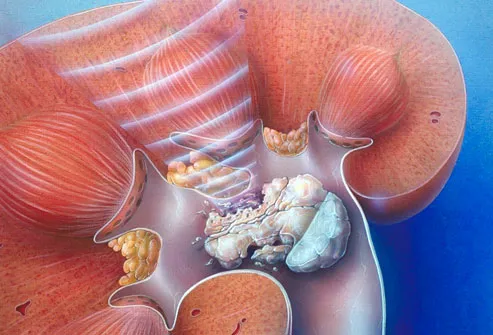
Types of Stones:-The most common types of stones are :-
1. Calcium Stones:- Most kidney stones are formed by the aggregation of
calcium compounds especially Calcium oxalate found in the body or in food consumed resulting in
formation of stone in the urinary tract. Conditions like Hyperparathyroidism
can increase the amount of oxalates in the body thus increasing the risk of
stone formation in the kidney.
2. Uric Acid Stones:- As the name suggests these stones are formed due to aggregation of uric acid particles in the urinary tract. Uric acid normally passes out of the body as waste but its concentration in the kidney can result in stone formation. The chances of having this type of stone in the kidney is highly likely in case of:
a. Gout
b. Low urine output
c. High animal protein diets
d. Alcoholism
3.Struvite Stones:- Some kidney stones are formed by struvites and are as such called struvite stones. If they are large in size they are also called Staghorn Calculi. They are often accompanied with Urinary tract infection. Women are more vulnerable to these stones as they tend to suffer more urinary tract infections.
4.Cystine Stones:- This is the least common of the kidney stones and are formed by a chemical called Cystine. People with family history of Cystinuria are more prone to this type of stone formation.
Treatment:- Most kidney stones of small size can be flushed out by drinking copious amount of water or other fluids. But stones bigger than 3mm may be difficult to pass and might need other forms of treatment.
1. Shock-wave Lithotripsy:-In this form of treatment ultrasound is used to send shock waves to kidney to break up the stone into small calculi or debris which can easily pass out with urine or can be captured by Uriteroscopy.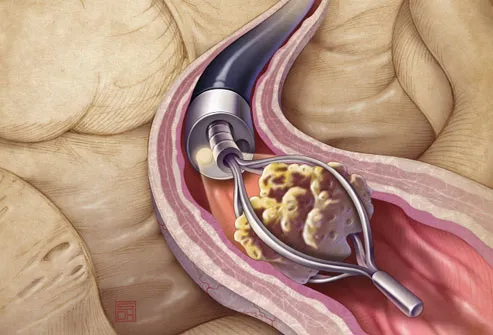
2. Surgery:- For a large stone which might not pass out with urine and might block the passage through kidney, surgery is required.
2. Uric Acid Stones:- As the name suggests these stones are formed due to aggregation of uric acid particles in the urinary tract. Uric acid normally passes out of the body as waste but its concentration in the kidney can result in stone formation. The chances of having this type of stone in the kidney is highly likely in case of:
a. Gout
b. Low urine output
c. High animal protein diets
d. Alcoholism
3.Struvite Stones:- Some kidney stones are formed by struvites and are as such called struvite stones. If they are large in size they are also called Staghorn Calculi. They are often accompanied with Urinary tract infection. Women are more vulnerable to these stones as they tend to suffer more urinary tract infections.
4.Cystine Stones:- This is the least common of the kidney stones and are formed by a chemical called Cystine. People with family history of Cystinuria are more prone to this type of stone formation.
Treatment:- Most kidney stones of small size can be flushed out by drinking copious amount of water or other fluids. But stones bigger than 3mm may be difficult to pass and might need other forms of treatment.
1. Shock-wave Lithotripsy:-In this form of treatment ultrasound is used to send shock waves to kidney to break up the stone into small calculi or debris which can easily pass out with urine or can be captured by Uriteroscopy.
2. Surgery:- For a large stone which might not pass out with urine and might block the passage through kidney, surgery is required.
5 Best Hospitals For Kidney Problems
- All India Institute of Medical sciences, Delhi.
- Manipal hospital , Bangalore.
- Christian medical college, Vellore, T.N.
- Fortis Hospital, Bangalore.
- Coimbatore kidney hospital, T.N.
Photos courtesy www.webmd.com
Ajaz707@gmail.com

No comments:
Post a Comment